
Jack Michaud
2025
Proper hardboot fitting is absolutely critical for your comfort, enjoyment, and performance while alpine snowboarding. The wrong fit can be painful and lead to the wrong impression about this sport. Believe it or not, properly fitted hardboots and molded liners can be more comfortable than softboots, other than for walking of course. When you have your boots fully sorted for freecarving, you can wear them all day without unbuckling, even through lunch.
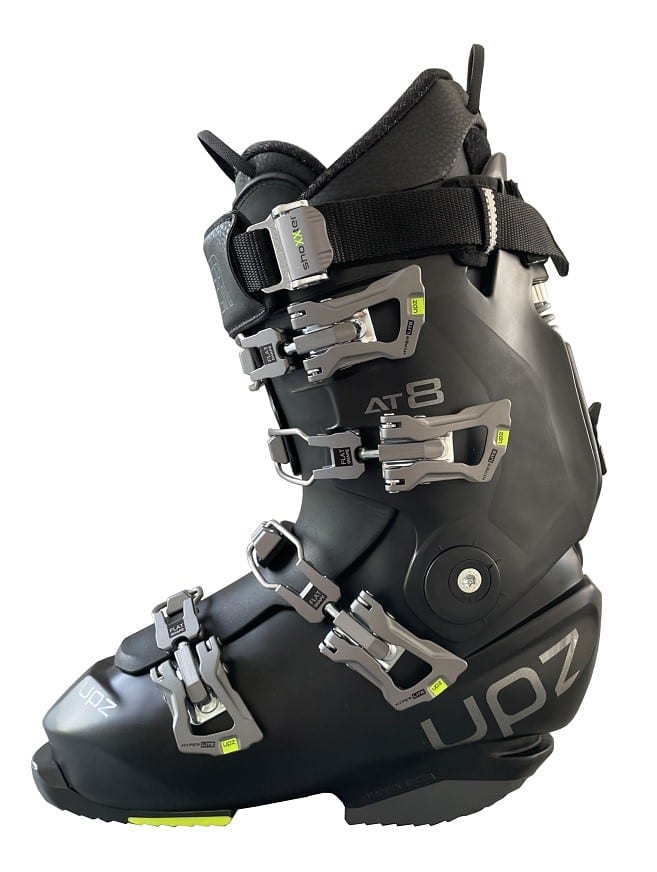
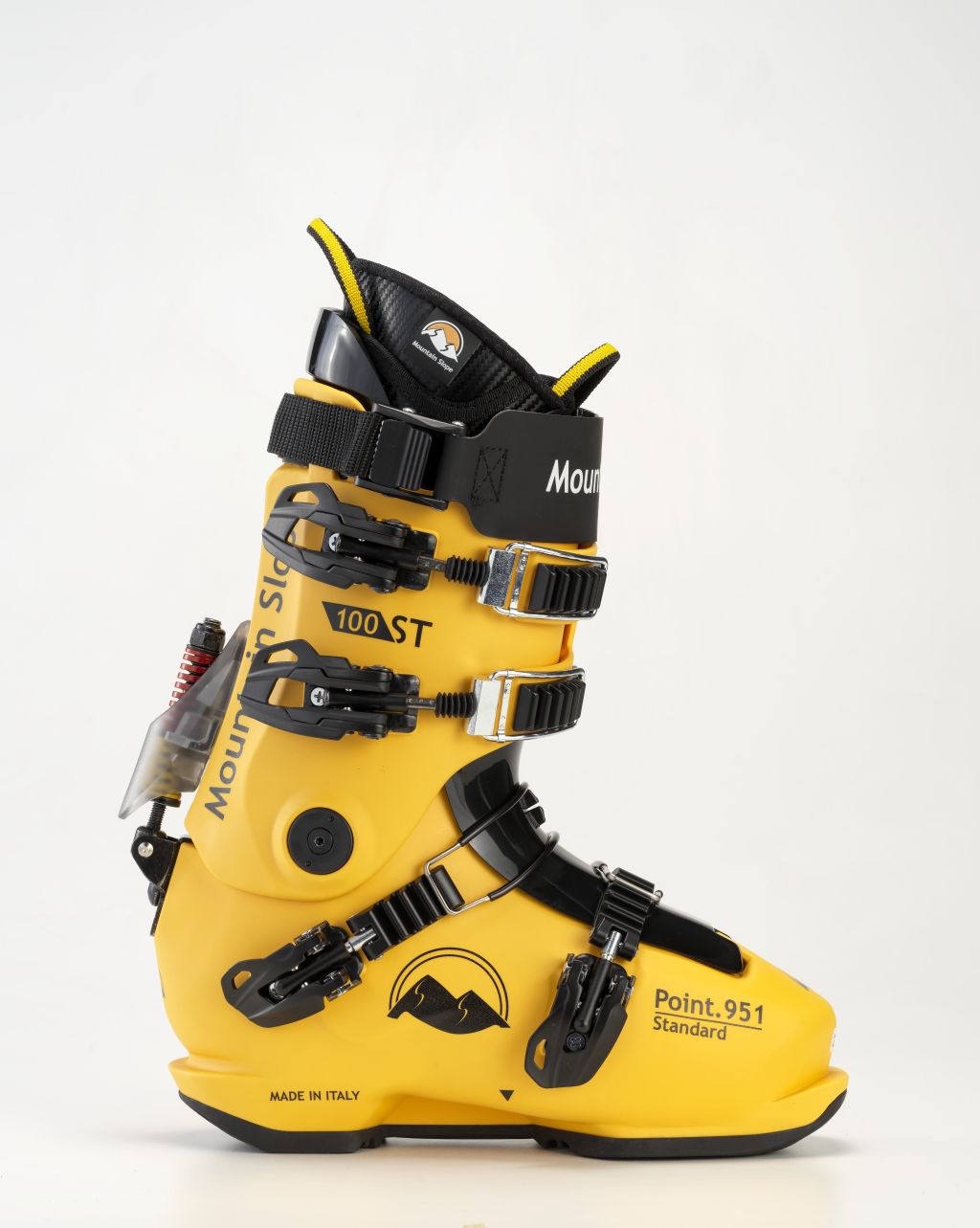
If you are looking for your first pair of hardboots for freecarving, I would typically recommend the UPZ AT8 for light to average weight folks for its features and approachable flex. If you are heavier or more aggressive, look to the UPZ RC12 or the Mountain Slope .951 Standard for more horsepower. Lighter weight riders should look at the UPZ XCR. Read on for all the considerations about hardboots.
Size
Hardboots are sized in Mondopoint, which is simply the length of your foot in centimeters. You can measure this at home by standing on a piece of paper with your heel and the paper against a wall. Mark the end of your longest toe, and measure from the end of the paper to the mark. Measure both feet; your feet may not be the same length.
Hardboot shells may span more than one size, and they make up the difference with different liners. You can see UPZ and Mountain Slope shell sizes on their websites. Choose the shell size that is the closest match to your Mondopoint size. Deeluxe does not publish a size chart at time of writing.
Usually, thanks to moldable liners, you can comfortably undersize a half size. For example my feet measure 28.0 and 28.4, so I use the Mountain Slope “C” shell, which is for Mondopoint size 27.0 to 28.0. Personally, I do not advocate undersizing more than a half size.
How to Buy the Right Size Online
It’s true that there are almost no shops in North America where you can walk in and try on hardboots. At time of writing there is Donek Snowboards in Colorado (Deeluxe), YYZCanuck in Toronto (Deeluxe), and Carving Crew Rentals in Utah (UPZ). Otherwise, you need to measure your feet, order the corresponding size, and determine the fit indoors when they arrive. Boot sellers know this is the case, and will gladly exchange boots that have not been worn outdoors and that have not had their liners molded.
To check if you got the right size shell, remove the liner from the shell, put your bare foot in the shell, and slide it forward until your toe just touches the end. Look or try to stick your hand behind your heel. One finger of space between your heel and the shell is a good performance fit. Two fingers is a comfort fit. More than that, you should probably downsize. It’s important to do the shell test because without molding the liner, you can’t fully evaluate the size just by trying the boots on.
Flex
Here is a list of current hardboots ranked approximately from softest to stiffest:
1. UPZ XCR
2. UPZ AT8
2. Deeluxe T325
3. UPZ RC12
3. Mountain Slope .951 Standard
3. Deluxe T700
4. Deeluxe T425
4. UPZ RCR
4. Mountain Slope .951 World Cup
5. Mountain Slope .951 Race Department
Volume, Width, Shape.
Boots may not work well for you even if the length is correct. Here is a summary of the shape of current hardboots.
Mountain Slope – medium toe, narrow heel, low instep
UPZ – wide toe, narrow heel, medium instep
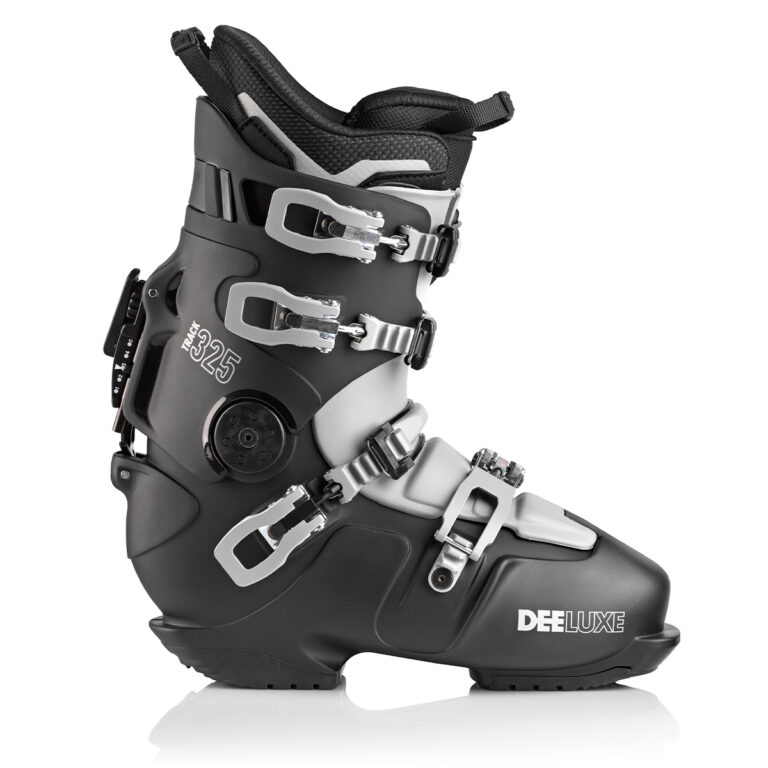
Deeluxe T325, T425, medium toe, medium heel, medium instep
Deeluxe T700 – wide toe, wide heel, high instep. Many people report problems with heel lift inside the boot with the T700, so choose these only if you require a high volume fit.
Features, Options and Extras
Moldable Liners
Mountain Slope, UPZ and Deeluxe all come with heat moldable liners. Molding is essential. Just “breaking them in” is not enough. You want to mold the liners both to the unique shape of your foot and leg, and to the shell of the boot. You can pay to have a shop do this for you, or you can DIY with these instructions. It’s not difficult.
Liners wear out faster than shells and should be replaced periodically, about every 100 days, YMMV. Intuition, Palau, and Zipfit are excellent aftermarket choices. They offer a range of volumes (thicknesses). Low volume liners are thinner. Zipfit liners are said to last as long as 400 days, but at a premium cost. If you’re not sure what you need, see a ski boot fitter. Or if a stock liner simply isn’t working out for you, you may need to add boot fitting material or ditch them for a pair of aftermarket liners sooner.
Deeluxe boots come with Intuition liners. Mountain Slope boots come with liners very similar to Intuition. UPZ liners are not like Intuition and do not mold as completely. User reports are hit or miss, many people replace them with Intuitions in short order.
Spring Systems
Mountain Slope and UPZ come with spring systems that allow you to adjust forward and backward flex, and forward lean. Deeluxe do not come with a spring system, just a forward lean selector. When this selector is locked in ride mode, it prevents the boot’s ankle hinge from hinging. All flex then comes from deforming the plastic shell itself. Most Deeluxe riders add an aftermarket spring system like Bomber BTS or DGSS. Even riders of Deeluxe’s softest boot, the 325, report shin bang with the stock forward lean selector in ride mode.
Tongues
Each boot maker offers a selection of tongues in different stiffnesses. If you’re not sure, start with the tongue that comes with the boot by default. The tongue also contributes some lateral stiffness to the boot.
Step-in Heels
UPZ and Deeluxe boots are compatible with the Intec step-in binding system. F2 makes polymer Intec heels, Bomber makes a metal version named Fintec (after the designer, Fin Doyle). These require Intec compatible bindings available from F2, Bomber, and SG. The heels have a release cable that runs inside the boot. In a very low volume or performance/race fit, you may not have room for this.
Ride/Walk Mode
UPZ and Deeluxe offer this, Mountain Slope does not. In walk mode, the boot’s forward lean adjustment (and spring system in the case of UPZ) is disengaged, and the ankle hinge can hinge freely. Deeluxe’s mechanism also offers a 3rd mode which allows free forward travel but limits backward travel to your selected forward lean. Although that’s probably moot because most Deeluxe riders replace this mechanism with a spring system that does not have walk mode at all. Riding in walk mode is possible and some riders prefer the much softer forward flex. Then you are relying on the boot tongue to control forward flex. However, there is a risk of overflexing your ankle in walk mode during a crash.
Footbeds
Custom footbeds are highly recommended. They boost the comfort and performance of your boots even more. But they can wait if your bank account needs to recover. A good custom footbed is molded to the bottom of your foot and structurally reinforced to prevent arch collapse. They are the final piece in the puzzle connecting you to your board. I wouldn’t ride without them. Currently they run north of $200. If that is not in the budget, there are off-the-shelf options like Superfeet or even Dr. Scholl’s that offer low/medium/high arch support. They’re better than the flimsy thing that is included in your liners.
Shell Stretching
If you’ve got the right size and shape shells and molded liners but there are still some spots of pressure or discomfort, a good ski shop can heat up your boots and stretch them in targeted locations. For example for more width or for bunions, or if your big toe is pressed into the end a bit much.
Liner Modifications
An optimal fit will result in no heel lift or shin bang. But if this isn’t totally the case for you, there are pads that can be adhered to the outside of your liners, or inserted into your liners to help customize the fit even further. See a good ski boot fitter for recommendations and installation. This looks like another interesting product for shin bang.
Liners with tongues sometimes suffer from the tongue twisting out of place while riding. Running the top strap under the boot’s plastic tongue will help with that.
Booster Straps
Booster Straps are a product used by the majority of ski and snowboard racers that replaces the stock strap at the top of the boot. It’s made with a section of elastic material unlike most stock straps. You place the elastic section over the front of the liner, inside the shell. This is according to their FAQ. They are a performance enhancer and a common solution for shin bang.
Ski Boots?
Ski boots are generally not recommended due to the way they flex and because they have much longer sole length, forcing you into higher binding angles. If you absolutely must be able to ski and snowboard in the same day without changing boots, 3-piece boots with tongues like K2 Revolve (formerly Full Tilt, formerly Raichle Flexon) or Dalbello Cabrio are best if they are on the softer side, like 110 or less. Also check out UPZ Ski Boots!